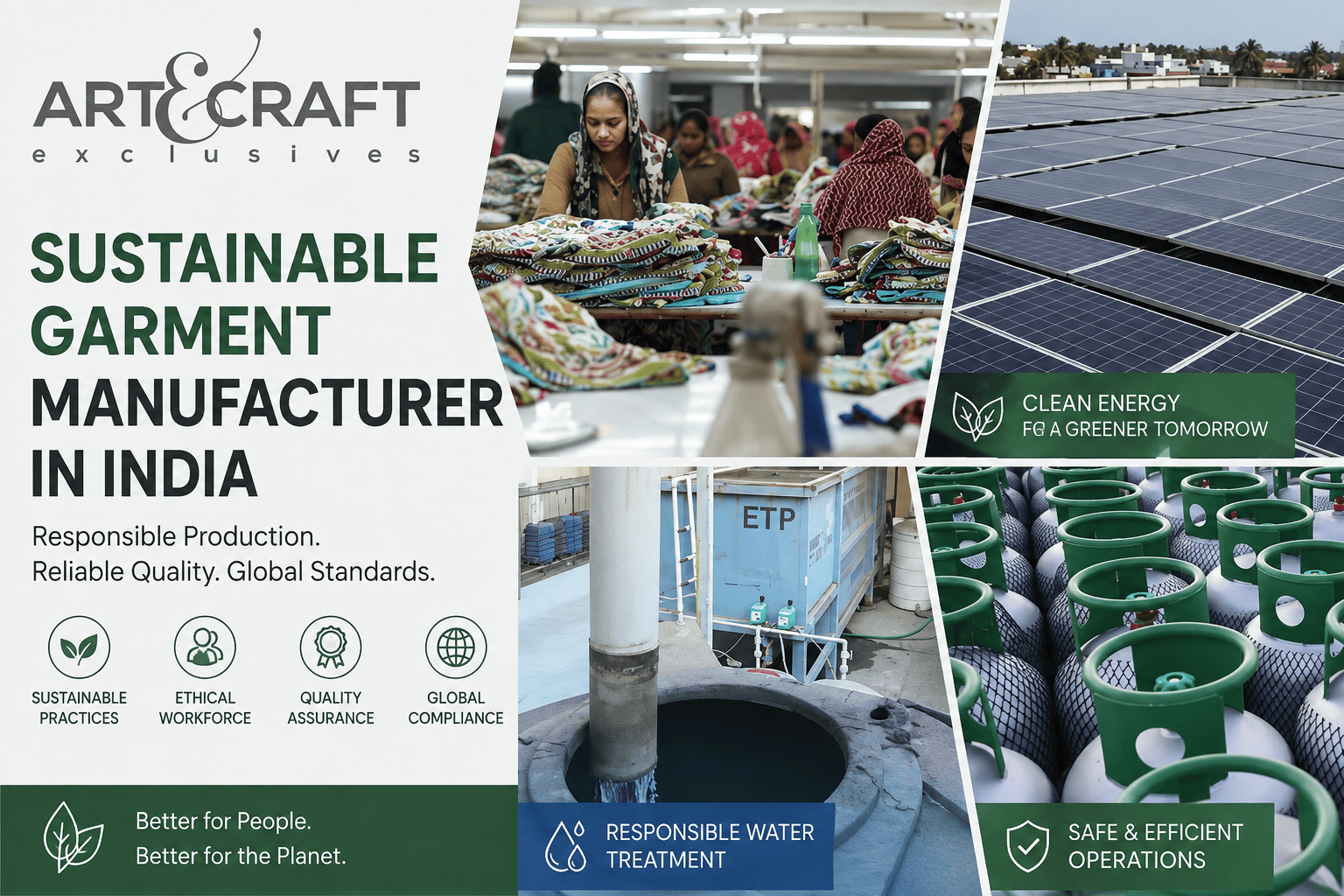
Fashion brands need clear information about responsible production before approving a supplier. But before that, they need to understand the materials, factory practices, quality checks, labour standards, packaging, and documents behind each garment.
For brands seeking a sustainable garment manufacturer in India, the decision should begin with evidence and practical questions. A supplier should explain what it can provide, which standards apply to its facility, and how it manages the product from development to export.
India has a large textile and apparel manufacturing base. During FY 2024–25, India exported textiles and apparel worth USD 35.99 billion. Including handicrafts, the total reached USD 37.75 billion. Readymade garments accounted for USD 15.99 billion. India was also the world’s sixth-largest exporter of textiles and apparel, and the sector contributed 8.63 percent of the country’s total exports in FY 2024–25.
This scale gives global brands access to fabrics, garment factories, artisan skills, embroidery, printing, finishing, and export services. Each supplier still requires careful review because sustainability depends on the actual practices of the facility producing the order.
What Sustainable Manufacturing Means
Sustainable garment production covers several connected areas. It includes material selection, product durability, responsible labour practices, waste control, quality management, safe production, and supply-chain information.
For a fashion brand, useful sustainability questions include:
- Is the fabric suitable for the garment’s expected use?
- Can the garment last through regular wear and washing?
- Does the factory maintain safe working conditions?
- Are material and certification claims documented?
- How does the factory reduce defects and avoidable waste?
- Does the supplier control subcontracting?
- Can the buyer receive relevant audit or compliance documents?
- Are packaging and care instructions suitable for the product?
The OECD describes due diligence in garment supply chains as an ongoing process. Businesses should identify, prevent, reduce, track, and communicate risks connected with labour, human rights, and environmental practices.
Sustainable production therefore requires continuous review. A single material choice or certificate does not describe the entire supply chain.
Why Global Brands Prefer Responsible Production
Global fashion brands face greater expectations from customers, retailers, importers, and regulators. They need suppliers that can provide consistent garments and reliable information about how those garments were made.
The European Union’s textile strategy promotes products that are more durable, repairable, recyclable, and free from hazardous substances. It also supports stronger information about textile products and improved responsibility across the supply chain.
These expectations affect brands that sell in Europe and influence sourcing standards in other markets.
Better Product Life
A garment with a longer useful life can reduce returns, replacement purchases, and material waste. Product life begins with design and continues through fabric selection, construction, finishing, and care instructions.
Brands can support product durability by:
- Choosing fabric that suits the garment’s purpose
- Testing shrinkage and colour fastness where required
- Approving fit and construction before bulk production
- Checking seam strength and finishing
- Using suitable trims and fastenings
- Providing clear care instructions
- Avoiding details that reduce comfort or durability
A well-made garment also gives the brand more control over customer satisfaction and repeat purchasing.
Better Supply-Chain Information
A reliable clothing manufacturing partner should help a brand understand the production process. This includes the factory location, material sources, quality process, audit status, and export arrangements.
Before placing an order, ask the supplier for:
- Registered business and factory details
- Production facility address
- Material composition and origin information
- Current audit or certification documents
- Subcontracting policy
- Quality-control process
- Testing and chemical-compliance support
- Packing and export documentation
The supplier should identify information that is available and explain which requirements need additional planning.
Stronger Buyer Readiness
Retailers and international buyers often request evidence before accepting claims about organic materials, recycled content, ethical production, or responsible sourcing.
Brands can prepare by keeping a product file with:
- Approved fabric composition
- Certification documents
- Factory audit records
- Approved sample photographs
- Test reports
- Packaging details
- Production and inspection records
- Care and fibre-content information
This makes communication easier when a buyer requests details during onboarding or before shipment.
Why India Supports Sustainable Fashion Sourcing
India’s textile industry includes mills, fabric suppliers, garment units, artisan clusters, embroidery specialists, exporters, and logistics providers. This wide supply base allows brands to develop products using different fabrics and production methods.
A clothing manufacturer in India may offer access to:
- Cotton, linen, viscose, rayon, and blended fabrics
- Organic materials where available and suitable
- Textured weaves and lightweight fabrics
- Embroidery and handwork
- Digital and screen printing
- Appliqué, smocking, and quilting
- Garment washing and finishing
- International packing and documentation
The country’s export strength is useful for global buyers, but it does not replace factory-level due diligence. Brands must examine the specific supplier, facility, process, and documents connected with their order.
What Brands Should Check Before Selection
Material Information
Ask the supplier:
- What is the fibre composition?
- What is the fabric weight?
- Is the material certified?
- What is the certification scope?
- Can the supplier provide a chain-of-custody document?
- Has the fabric been tested for shrinkage and colour fastness?
- Is the material suitable for the intended garment?
- Are lower-impact alternatives available?
Use careful language when describing materials. “Organic,” “recycled,” and “certified” should appear only when the brand has supporting evidence.
Workplace Practices
Ask which audits or certifications cover the production facility. Check the document date, address, scope, validity, and issuing body.
A practical review should cover:
- Working hours and employment practices
- Workplace safety
- Fire and emergency procedures
- Worker welfare
- Wage and labour requirements
- Grievance process
- Subcontracting controls
- Corrective actions from previous audits
Art & Craft’s sustainability information describes ethical labour, responsible sourcing, safe working conditions, and transparent business practices. Buyers should request the latest documents that apply to the facility assigned to their order.
Quality and Waste Control
Quality problems create avoidable waste. Incorrect cutting, rejected pieces, poor stitching, shade variation, and failed finishing can increase material use and delay shipment.
A practical quality system should include:
- Fabric inspection before cutting
- Shade and shrinkage checks
- Pattern and measurement approval
- In-line stitching checks
- Surface-work inspection
- Final measurement review
- Finishing and pressing checks
- Packing and carton inspection
The buyer should also ask how the factory records defects and handles rejected or reworked garments.
Art & Craft’s Sustainable Production Approach
Art & Craft Exclusives is a Jaipur-based garment manufacturer and certified two-star textile export house. Founded in 1995, we work across women’s wear, men’s wear, kidswear, accessories, and home textiles.
As a sustainable garment manufacturer in India, Art & Craft supports brands from design development and fabric sourcing through sampling, bulk production, quality control, packing, and export coordination.
Our 100,000-square-foot facility includes:
- In-house design studio
- Dedicated sampling department
- Computerised embroidery machines
- Cutting and spreading systems
- Skilled stitching lines
- Finishing and checking units
- Secure storage and packing area
- Logistics and export coordination desk
This integrated setup allows different teams to work from approved product information and helps the buyer coordinate fewer separate suppliers.
Responsible Material Sourcing
Art & Craft sources fabrics through mills, artisan clusters, and sustainable suppliers. Our material range includes cotton, viscose, rayon, linen, blends, textured weaves, and organic fabrics where suitable and available.
Material selection should consider:
- Garment purpose
- Fabric durability
- Comfort and drape
- Expected washing and care
- Surface-work requirements
- Target price
- Certification and documentation needs
We also develop embroidery, printing, appliqué, smocking, quilting, and embellishment. These details need to be tested against the selected fabric because surface work can affect drape, comfort, and durability.
Quality Management
Art & Craft’s quality process starts at the fabric stage and continues through stitching, finishing, pressing, and final packing. Our listed checkpoints include measurement accuracy, fabric stability, colour fastness, thread and seam strength, fit consistency, embroidery durability, finishing, and packing.
Our quality-control inspections follow global or buyer-approved standards. Brands should provide their own inspection protocol, AQL requirement, testing list, or retailer standard before production begins.
Audits and Responsibility
Art & Craft follows SMETA-based ethical and labour-practice audits, the ICS framework for responsible sourcing, safety and environmental care, and a structured quality-management system.
These credentials should be reviewed as part of normal supplier due diligence. Buyers should confirm:
- The current audit or certificate date
- The production facility covered
- The applicable scope
- Any open corrective actions
- Whether the document applies to the intended order
Clear documentation helps brands make accurate claims and respond to buyer questions.
A Practical Production Review Example
Consider a brand developing an embroidered cotton resortwear collection.
The production review should cover:
- Design review: Confirm the silhouette, measurements, embroidery placement, trims, and construction details.
- Material review: Check cotton composition, fabric weight, shrinkage, colour fastness, and suitability for embroidery.
- Sample development: Produce a prototype and fit sample using the proposed fabric and surface work.
- Wear and handling review: Check comfort, drape, embroidery durability, seam strength, and care instructions.
- Production approval: Record all corrections and approve the final sample before bulk cutting.
- In-line quality checks: Monitor measurements, embroidery, stitching, and finishing during production.
- Final inspection: Check the finished garments, labels, cartons, and packing before dispatch.
This type of review gives the buyer a record of decisions and helps reduce changes after production has started.
Sustainable Manufacturing Checklist for Buyers
Use this checklist when comparing suppliers:
- Factory location and legal business details
- Current audit and certification documents
- Material composition and certification evidence
- Fabric testing and colour-fastness process
- Pattern, cutting, and waste-control process
- In-line and final quality checks
- Worker safety and labour practices
- Subcontracting controls
- Packaging materials and packing instructions
- Export documentation
- Product traceability information
- Sample and bulk-production timeline
A buyer comparing a clothing manufacturer India option should assess the supplier against the same checklist used for factories in other countries. This creates a fair comparison based on evidence, capability, and total order requirements.
How to Start an Enquiry
A complete brief helps the supplier assess the product and provide a practical response. Include:
- Product sketches or reference garments
- Tech pack and measurement chart
- Size range and grading requirements
- Fabric composition, weight, colour, and finish
- Preferred certification or traceability requirements
- Print, embroidery, wash, and embellishment details
- Quantity by style, colour, and size
- Target price range, if available
- Packaging and labelling instructions
- Destination market and delivery date
- Testing, audit, chemical, and compliance requirements
Sampling and production timelines depend on the garment category, material availability, surface work, quantity, and approval speed. Art & Craft’s sampling generally takes three to four weeks and production averages 11 to 13 weeks, subject to these factors.
Export Support for Global Brands
A reliable garment exporter India supplier must manage documents and delivery requirements as carefully as production.
Art & Craft’s export and logistics team coordinates:
- Shipment timelines
- Packaging specifications
- Labelling accuracy
- Export documents
- Cargo bookings
- Tracking and status updates
We have experience shipping to Europe, Asia, and North America. Buyers should confirm the destination port, delivery terms, inspection process, insurance requirement, carton markings, and document list before approving the order.
Final Buyer Checklist
Before confirming a production order, make sure you have:
- Approved the fabric and trims
- Reviewed the sample and measurements
- Confirmed the sustainability evidence
- Checked the relevant audit documents
- Agreed on quality standards
- Confirmed packaging and labelling
- Recorded the production timeline
- Shared testing and compliance requirements
- Confirmed export documents and delivery terms
- Received a written production quotation
Responsible manufacturing works best when both sides communicate clearly from the beginning. A well-prepared brief, verified material information, careful sampling, and documented quality process give global fashion brands a stronger basis for making sustainable sourcing decisions.
Start a Responsible Production Discussion
A sustainable garment manufacturer in India should help brands make informed decisions about materials, construction, quality, compliance, and export requirements. The supplier should also explain the evidence behind its sustainability claims.
Art & Craft combines product development, fabric sourcing, sampling, garment production, quality control, packing, and export coordination in one Jaipur facility.
Discuss your sustainable garment project with Art & Craft. Share your tech pack, product category, estimated quantity, preferred materials, destination market, and delivery date for an initial production review.
FAQs
1. What does sustainable garment manufacturing include?
It includes responsible material selection, product durability, safe working conditions, quality control, waste reduction, supply-chain information, suitable packaging, and documentation for relevant environmental and social claims.
2. Can Art & Craft source certified or organic fabrics?
Art & Craft sources organic fabrics and other materials through mills, artisan clusters, and sustainable suppliers where they suit the product and are available. Buyers should share their exact certification and traceability requirements before development begins.
3. Which audits and certifications does Art & Craft have?
Art & Craft follows SMETA-based ethical and labour-practice audits, the ICS framework for responsible sourcing and environmental care, a structured quality-management system, and Star Export House status. Buyers should request current documents and confirm their scope before placing an order.
4. How can a fashion brand verify a sustainability claim?
Request the relevant certificate, audit report, material composition, facility address, validity date, issuing organisation, and certification scope. The evidence should relate to the material, facility, or product described in the claim.
5. How does Art & Craft control garment quality?
The quality process begins with fabric checks and continues through stitching, finishing, pressing, and packing. The listed checkpoints include measurements, fabric stability, colour fastness, seam strength, fit, embroidery durability, finishing, and carton checks.
6. Can Art & Craft support international export requirements?
Yes. Art & Craft supports packaging, labels, export documents, cargo bookings, tracking, and shipment updates for international clients. We have experience shipping to Europe, Asia, and North America.