India offers businesses a wide range of bed linen, bath linen, table linen, cushions, rugs, curtains, and handmade home decor textiles. The country’s textile and apparel exports, including handicrafts, reached USD 37.75 billion in FY 2024-25, showing a 5.2 percent rise from the previous year. This scale gives importers access to established supply chains, skilled makers, and varied price levels.
For buyers planning their next collection, Bharat Tex 2026 provides an ideal place to meet suppliers, compare materials, and begin direct sourcing discussions. The show will take place from 14 to 17 July 2026 at Bharat Mandapam, New Delhi.
Why Source Home Textiles From India?
India has a strong base in cotton, handloom products, printed fabrics, made-ups, rugs, and floor coverings. Home-textile demand has also remained steady in major overseas markets. Buyers can source both large-volume basics and small-run collections with detailed work. This range suits retailers, hospitality buyers, interior brands, online sellers, and private-label businesses.
When working with clothing manufacturers, do not assume that apparel capacity means home-textile expertise. Ask each supplier which categories they produce in-house, what they outsource, and how they control quality across weaving, printing, stitching, washing, and packing.
What Bharat Tex 2026 Offers
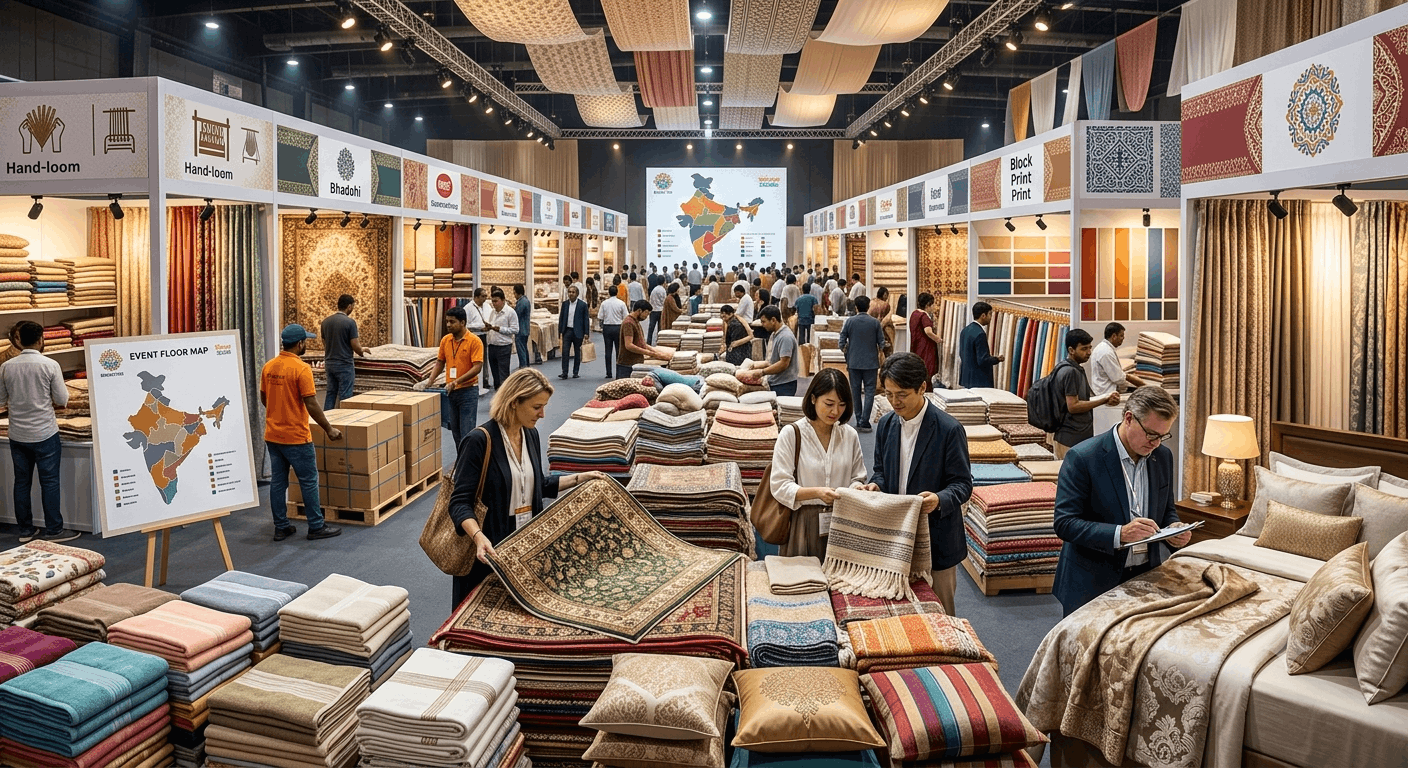
Bharat Tex 2026 brings the full textile value chain into one venue, including home furnishings, floor coverings, carpets, fibres, yarns, fabrics, apparel, and technical textiles.
The official event programme expects more than 3,500 business exhibitors, 7,000 international buyers from over 140 countries, and over 130,000 trade visitors. For a sourcing team, this means less time spent in multiple factory visits before initial supplier screening.
At the fair, expect to find:
- Cotton, linen, blends, recycled fibres, and performance fabrics
- Printed and embroidered bedding, quilts, throws, curtains, and cushion covers
- Bath towels, kitchen textiles, hotel linen, rugs, and floor coverings
- Suppliers offering sampling, custom labels, export packing, and bulk production
- Business meetings, policy discussions, and industry sessions
The event brochure also lists more than 20,000 textile products and over 100 policy and industry discussions. Book meetings early and prepare a short sourcing brief with your target products, fabric weight, sizes, print references, quantity, packing standard, target price, and delivery market.
A Guide to Sourcing Process
Start by defining the product before you contact suppliers. A general request for “cotton bedsheets” brings quotations that cannot be compared fairly.
- Set technical specifications: State fabric composition, weave, GSM, thread count where relevant, dimensions, colour standards, shrinkage limits, trims, labels, and carton requirements.
- Shortlist suppliers by category: Review the Bharat Tex exhibitor directory before travel, then arrange appointments with suitable home-textile producers.
- Check production evidence: Ask for factory photographs, process flow details, current capacity, sample records, testing reports, and export-market references.
- Request samples before placing bulk orders: Test colour fastness, pilling, shrinkage, stitching, absorbency for towels, and wash performance. Keep one signed approval sample for production comparison.
- Confirm commercial terms in writing: Record the minimum order quantity, sample cost, payment schedule, Incoterms, inspection stage, lead time, and remedy for defects or delayed shipments.
Many clothing manufacturers in India can support private-label work, but buyers should still verify whether the factory has the right machines for wider home-textile formats, quilting, towel finishing, or rug production.
Questions To Ask at the Fair
Supplier meetings should focus on proof, not only product displays. Use direct questions that help your buying team compare offers.
1. Which processes do you complete at your own facility?
2. What is your usual order quantity for this product?
3. Can you match our approved colour standard across repeat orders?
4. Which tests do you complete before shipment?
5. What is your current production lead time after sample approval?
6. Can you provide references from similar export markets?
7. How do you handle defective pieces found during final inspection?
A reliable garment exporter should explain these points clearly and provide documents after the meeting. Avoid committing to an order based only on a booth sample or a low first quotation.
Working With Art & Craft
At Art & Craft, we help businesses source home textiles from India with greater clarity and control. Based in Jaipur, we bring more than 30 years of textile export experience to product development, sampling, production coordination, quality checks, and shipment preparation.
As a cloth manufacturing company, we work closely with buyers to understand their fabric, design, sizing, label, packaging, and delivery requirements. Whether you need bedding, cushions, throws, table linen, or customised home-textile collections, our team supports each stage from the first sample to bulk dispatch.
Our focus remains on clear communication, consistent quality, and practical solutions that suit your market. By working with Art & Craft, buyers can build home-textile collections that reflect their brand requirements while sourcing through an experienced Indian export partner.
Build A Better Supplier Relationship
India’s home garment manufacturing sector works best when buyers share complete information early. A rushed brief can lead to fabric substitutions, incorrect sizing, or late approvals.
Choose wholesale clothing manufacturers that encourage documented specifications and third-party inspection. Confirm every change by email, especially changes to fabric, print placement, packaging, shipping marks, and delivery dates.
If your brand wants block prints, handwork, or cultural-inspired details, a textile company in Jaipur can offer access to local craft and printing knowledge. But, confirm repeatability before planning a large retail launch.
Conclusion
Bharat Tex 2026 gives businesses a structured route to source Indian home textiles, meet suppliers, inspect product ranges, and compare capabilities in person. India’s export strength, broad material base, and growing home-textile demand make the event useful for buyers planning stable, long-term supply relationships. The best results come from preparation. Arrive with clear specifications, ask detailed questions, approve samples carefully, and select partners based on evidence rather than price alone.
FAQs
Q1. When is Bharat Tex 2026?
Bharat Tex 2026 will take place from 14 to 17 July 2026 at Bharat Mandapam in New Delhi.
Q2. Can international buyers source home textiles at Bharat Tex?
Yes. The event covers home furnishings, floor coverings, carpets, fabrics, and related textile categories, with thousands of exhibitors and international buyers expected to attend.
Q3. What home textiles can buyers source from India?
Buyers can source bedding, towels, bath linen, kitchen linen, curtains, cushion covers, rugs, carpets, quilts, and handmade decorative textiles.
Q4. How should I check a home-textile supplier?
Review factory capability, material records, sample quality, testing reports, export experience, production capacity, and written commercial terms before placing a bulk order.
Q5. Why should buyers work with Indian suppliers?
Because India offers a strong textile supply chain, skilled production teams, and a wide range of home-textile products at competitive prices. Suppliers can also support custom designs, private labels, bulk orders, and export-ready packaging.