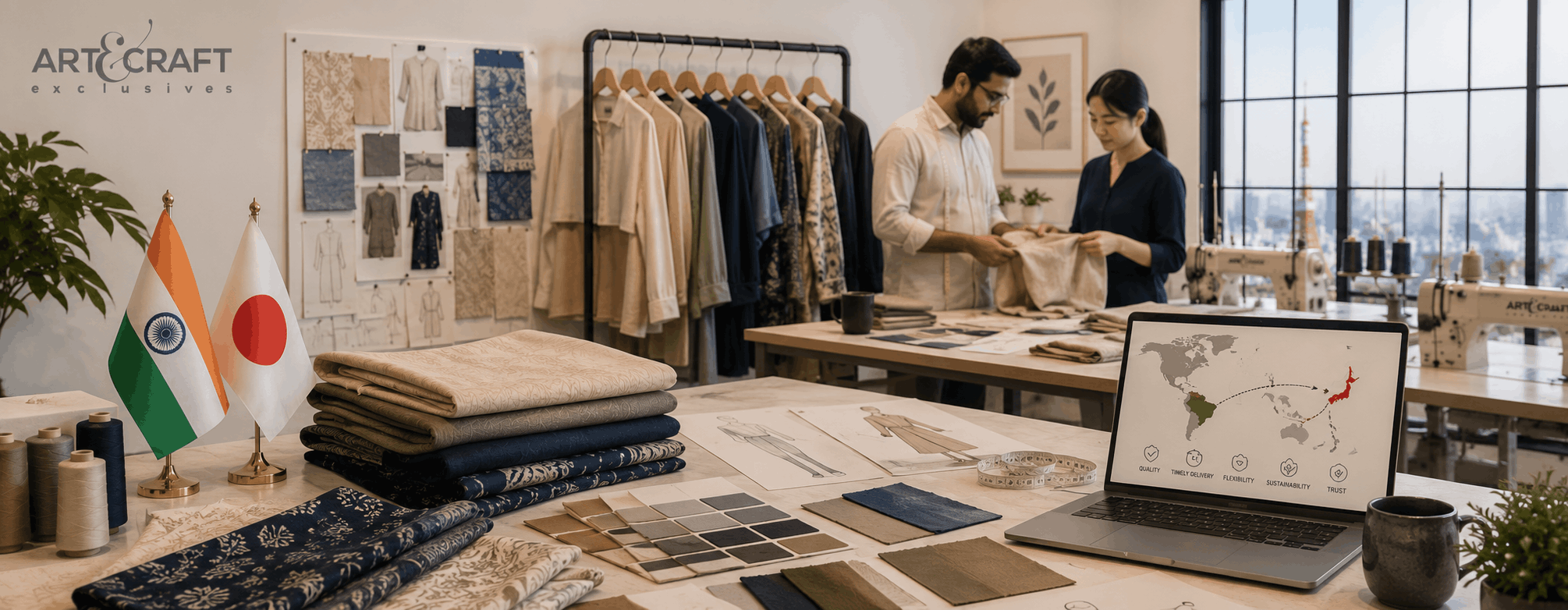
Japan has always been known for its high standards in fashion, quality, and craftsmanship. Buyers in the country look for suppliers who can deliver consistent quality, follow strict timelines, and maintain long-term business relationships. At the same time, India has become one of the world’s leading garment manufacturing hubs with a strong textile base, skilled workforce, and advanced production facilities. According to India’s Ministry of Textiles, the country’s textile and apparel industry contributes around 2.3% to the national GDP and supports more than 45 million direct jobs. India also remains one of the largest producers of cotton and textile products in the world. These strengths make Indian manufacturers valuable partners for global fashion businesses.
India Trend Fair Tokyo 2026 brings together Japanese buyers and Indian exporters on one platform. The exhibition gives retailers, wholesalers, department stores, importers, and fashion houses an opportunity to discover a reliable clothing manufacturer for Japanese brands without travelling across multiple countries. For businesses looking to build stable sourcing relationships, the fair offers direct access to experienced Indian manufacturers that understand international quality standards and export requirements.
Why Japanese Fashion Brands Are Looking Beyond Domestic Manufacturing
Japan has a highly respected apparel industry. But, many clothing manufacturers in Japan face increasing production costs, an ageing workforce, and limited manufacturing capacity. As fashion cycles become shorter and consumer demand continues to change, many brands are expanding their supplier network to maintain flexibility.
India offers several advantages for Japanese businesses.
- Strong textile supply chain from fibre to finished garments.
- Skilled workers with experience across different garment categories.
- Ability to produce both small and large production runs.
- Competitive manufacturing costs without compromising quality.
- Growing investment in modern production technology.
- Better support for sustainable manufacturing practices.
These factors allow Japanese brands to reduce sourcing risks while maintaining product quality.
How Indian Manufacturers Support Japanese Fashion Brands
Consistent Product Quality
Japanese buyers carefully examine every stage of production. They expect accurate sizing, neat stitching, colour consistency, and durable fabrics. An experienced garment manufacturer India follows structured quality control systems throughout cutting, stitching, finishing, and packing. Regular inspections help reduce defects before products are shipped.
Flexible Manufacturing
Every fashion brand has different business needs. Some require seasonal collections while others introduce products throughout the year. A reliable custom clothing manufacturer India can produce garments according to the buyer’s specifications, including fabric selection, trims, embroidery, printing, washing techniques, and packaging requirements. This flexibility helps Japanese brands maintain their unique identity.
Private Label Production
Many retailers want exclusive collections without investing in their own manufacturing facilities. A trusted private label clothing manufacturer India supports buyers by producing garments under the retailer’s own brand while maintaining complete confidentiality throughout the manufacturing process. This approach allows businesses to expand their product range more efficiently.
Reliable Export Experience
International trade requires careful documentation, quality compliance, and timely shipping. Companies experienced in clothing export from India to Japan understand customs procedures, shipping documentation, packaging standards, and delivery planning. Their export knowledge reduces delays and creates smoother business operations.
Why Face-to-Face Meetings Still Matter
Although online communication has become common, business relationships become stronger through personal meetings.
At India Trend Fair Tokyo 2026, buyers can discuss manufacturing capabilities directly with suppliers, examine garment quality, compare fabrics, review production samples, and understand the company’s working process. These conversations help both sides build trust before starting large production orders.
What Businesses Can Expect at the Art & Craft Booth
Art & Craft Exclusives has built its reputation by supplying quality garments to international fashion brands. The company focuses on long-term partnerships rather than one-time orders.
Visitors can expect to see:
- Wide Product Range: The company manufactures garments across multiple categories for fashion brands seeking dependable sourcing options. Buyers can review finished samples and discuss future collections.
- Manufacturing Experience: As an established apparel manufacturer India, Art & Craft follows organised production systems supported by experienced teams, quality inspections, and modern manufacturing practices.
- Product Development Support: Design discussions begin with a simple concept. Art & Craft works closely with buyers during sampling, fabric selection, size development, trims, and production planning before final manufacturing begins.
- Flexible Production Planning: Whether a buyer requires seasonal collections or regular production schedules, the company works to match manufacturing capacity with customer requirements while maintaining delivery commitments.
- Transparent Communication: Clear communication remains essential in international business. Buyers can discuss production timelines, order quantities, quality standards, compliance requirements, and shipping schedules directly with the team.
- Long-Term Business Focus: Every successful sourcing relationship depends on consistency. Art & Craft aims to become a dependable clothing manufacturing partner India by maintaining quality, delivery performance, and professional communication across every order.
Choosing the Right Manufacturing Partner
Before selecting a supplier, Japanese buyers should evaluate several important factors.
- Manufacturing capacity and product expertise.
- Quality control procedures.
- Export experience with international markets.
- Compliance with social and environmental standards.
- Communication and responsiveness.
- Sampling process and development support.
- Delivery performance and production planning.
Selecting a supplier based only on price may create problems later. A reliable manufacturing partner provides greater value through consistency and long-term cooperation.
Conclusion
India continues to strengthen its position as one of the world’s leading garment sourcing destinations. Its manufacturing expertise, strong textile supply chain, skilled workforce, and export experience allow Indian companies to serve international fashion brands with confidence.
For Japanese businesses looking to expand sourcing opportunities, India Trend Fair Tokyo 2026 provides an excellent opportunity to meet experienced manufacturers under one roof. Buyers visiting the Art & Craft booth can explore production capabilities, discuss future collections, and build business relationships that support steady growth for years to come.
FAQs
Q1. Why should Japanese fashion brands source garments from India?
India offers a complete textile ecosystem, skilled manufacturing teams, competitive production costs, and extensive export experience. These strengths help brands achieve consistent quality and dependable deliveries.
Q2. What products can Art & Craft manufacture?
Art & Craft manufactures a wide range of fashion garments for international buyers and supports product development, sampling, quality control, and bulk production according to customer requirements.
Q3. Can Indian manufacturers produce private label clothing?
Yes. Many Indian manufacturers provide private label services, allowing retailers and fashion brands to sell garments under their own brand names while maintaining product confidentiality.
Q4. What can buyers expect during India Trend Fair Tokyo 2026?
Buyers can meet manufacturers directly, inspect garment samples, discuss production capabilities, compare fabrics, review quality standards, and begin conversations for future sourcing partnerships.
Q5. How can businesses choose the right Indian clothing manufacturer?
Businesses should review manufacturing experience, quality systems, export knowledge, communication practices, compliance standards, production capacity, and delivery history before making a sourcing decision.