Organic cotton is a preferred choice for fashion brands that prioritize clearer fibre records, responsible sourcing options, and comfortable natural-fibre garments. For buyers, the decision is not only about selecting cotton. It also involves checking certificates, transaction records, processing standards, product quality, and the factory that will make the finished garment.
India is one of the world’s major textile and apparel sourcing destinations. Textile and apparel exports, including handicrafts, represented 8.63 percent of India’s total exports in FY 2024-25, while India accounted for 4.1 percent of global textile and apparel trade. Cotton textiles alone, including yarn, fabrics, made-ups, and handloom products, generated USD 12.30 billion in exports that year.
For global fashion brands, these figures point to a well-developed supply network, but scale alone does not make a supplier suitable. Brands need reliable fabric sourcing, accurate product development, responsible production practices, quality checks, shipment support, and clear records for material claims.
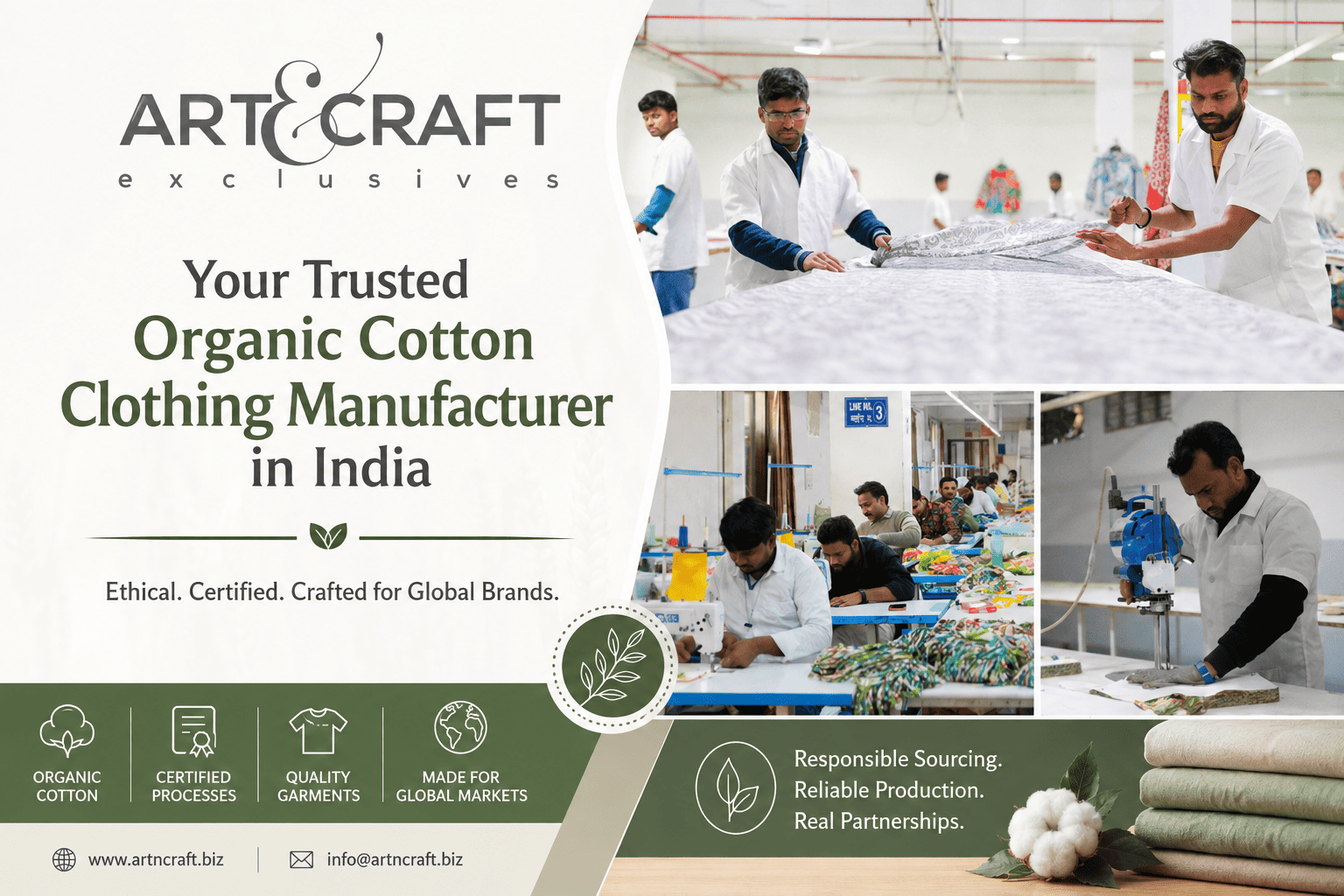
At Art & Craft Exclusives, we work with fashion brands that need thoughtfully developed garments for international markets. As an organic cotton clothing manufacturer in India, we help buyers evaluate fabrics, develop samples, manage garment production, carry out quality checks, and prepare orders for export.
Why Organic Cotton Matters to Fashion Brands
Organic cotton is now part of the sourcing plan for many fashion businesses. It is used in women’s clothing, men’s shirts, children’s clothing, sleepwear, casualwear, resortwear, and home textiles.
For brands, the value of organic cotton lies in three areas:
- Access to cotton grown under recognised organic farming standards
- Better material records through approved certification systems
- A natural-fibre option for collections built around comfort and responsible sourcing
Organic cotton does not refer to one fabric type. It can be woven or knitted, crisp or soft, lightweight or structured. A brand should select the fabric according to the garment’s purpose, price point, wash requirements, climate, and customer expectations.
For example, a light cotton voile may suit a summer dress, while cotton poplin, twill, jersey, or slub fabric may be better for shirts, trousers, casual separates, or children’s garments.
Organic Cotton Requires Clear Records
A garment can only carry an organic claim when the supporting material and supply-chain documents match that claim. This is an important point for global fashion brands, retailers, and private-label businesses.
The Organic Content Standard and the Global Organic Textile Standard, widely known as GOTS, use chain-of-custody systems to track certified organic cotton volumes through the supply chain.
GOTS covers the post-harvest stages of textile production, including processing, manufacturing, packaging, labelling, trading, and distribution. A GOTS-certified textile must contain at least 70 percent certified organic natural fibres. A product labelled as “organic” under GOTS must contain at least 95 percent certified organic fibres.
Before a brand makes an organic cotton claim, we recommend confirming:
- Fibre composition
- Organic-fibre percentage
- Fabric certificate
- Certificate scope and validity date
- Transaction certificate, where required
- Fabric mill and supplier details
- Dyeing, printing, and finishing requirements
- Test reports for shrinkage, colour fastness, and performance
- Care-label and fibre-content wording
- Final product claim for the destination market
These checks help brands avoid incorrect product descriptions, unsupported labels, and late changes during production.
Why Brands Source Organic Cotton Apparel From India
India offers a broad textile base, from cotton sourcing and fabric production to garment manufacturing, printing, embroidery, packing, and export logistics. This makes it easier for brands to manage several production needs through one sourcing market.
India’s National Programme for Organic Production is among the standards recognised by GOTS for organic-fibre certification, subject to the relevant certification scope and accreditation requirements.
A clothing manufacturer in India can support brands that need product development and garment production in one coordinated process. But, the buyer should always confirm the exact facility, fabric source, certification scope, quality process, and export documentation before approving a bulk order.
What We Provide at Art & Craft
We have worked in garment manufacturing and exports since 1995. We are a Jaipur-based certified two-star textile export house, with more than 30 years of experience serving international buyers.
We develop and produce women’s wear, men’s casual shirts, kidswear, accessories, and home textiles. Our production process covers product development, fabric sourcing, samples, bulk production, quality control, packing, and export coordination.
As a clothing manufacturing partner, we begin by understanding the full product brief rather than moving straight to sampling. This helps us identify fabric suitability, construction requirements, expected order quantity, compliance needs, packaging details, and delivery expectations at an early stage.
Product Development and Sampling
We can work from a detailed tech pack, a hand sketch, a reference garment, an inspiration board, or a product idea that needs technical development.
Our development team supports:
- Fabric direction and sourcing
- CADs and technical sketches
- Pattern development
- Measurement charts
- Fit samples
- Fabric and trim approvals
- Print and embroidery sampling
- Garment construction review
- Pre-production sample approval
Sampling gives the buyer an opportunity to review the fit, fabric, colour, finish, trims, labelling, and overall product before bulk production begins.
For organic cotton styles, we recommend confirming the fabric documents before approving the final sample. This creates a clearer link between the approved garment and the material that will be used for bulk production.
Fabric Sourcing for Fashion Collections
We source cotton, viscose, rayon, linen, blends, textured weaves, and organic fabrics where suitable and available.
Our team reviews the fabric in relation to the garment. We consider weight, weave or knit structure, drape, opacity, shrinkage, hand feel, colour response, print suitability, embroidery suitability, and intended use.
For an organic cotton collection, a buyer should share the required fibre percentage, preferred certification, colour palette, fabric weight, garment category, target price, and destination market. This allows us to assess the available fabric options before development starts.
Manufacturing for Global Markets
A clothing manufacturer India supplier must be able to follow a buyer’s approved product file with care. Bulk production should match the approved sample in fit, colour, fabric, stitching, measurements, labels, trims, packing, and final finish.
Our production process includes:
- Product briefing and technical review
- Fabric and trim sourcing
- Sample development
- Buyer comments and sample revision
- Pre-production approval
- Bulk fabric inspection
- Cutting and stitching
- Finishing and pressing
- Inline and final quality checks
- Packing and shipment preparation
We also develop value-added details such as embroidery, printing, appliqué, smocking, quilting, and embellishment, according to the product brief.
For organic cotton garments, we advise brands to decide on print methods, dyes, finishes, trims, labels, and certification-related claims before bulk cutting. Changes after this stage can affect cost, lead time, and product documentation.
Quality Control and Compliance
Quality should begin before cutting starts. We review fabrics for relevant concerns such as shade variation, weight, shrinkage, surface condition, and construction. During production, our team checks measurements, stitching, seam strength, embroidery durability, finishing, pressing, and packing.
Our workplace practices and responsible sourcing approach are supported by SMETA-based ethical and labour-practice audits, the ICS framework, and a structured quality-management system. Buyers should share any additional retailer, brand, testing, or audit requirements at the beginning of the enquiry.
For each production order, we encourage buyers to confirm:
- Required product tests
- Restricted-substance requirements
- Social-compliance requirements
- Inspection level
- Labelling requirements
- Packaging standards
- Carton markings
- Shipping documents
- Destination-country import requirements
We believe a clear approval process protects both the buyer and the manufacturer.
Export Support From Jaipur
As a garment exporter India business, we support buyers through the final stages of production, including packing, labelling, export paperwork, cargo planning, and shipment coordination.
We have experience serving buyers in Europe, Asia, and North America. Our export team coordinates packaging specifications, label accuracy, shipment documentation, cargo bookings, tracking, and dispatch updates.
Before production begins, we ask buyers to confirm the delivery address, shipping terms, mode of transport, carton specifications, labelling rules, and required export documents. These details help prevent delays at the final stage.
How to Start an Organic Cotton Enquiry
An apparel factory India supplier can provide a more accurate response when the enquiry includes complete technical information.
Please share:
- Tech pack, sketch, or reference image
- Product category and intended customer
- Measurement chart and size range
- Fabric composition and weight
- Organic-cotton requirement and preferred certificate
- Colour, print, embroidery, and trim details
- Quantity by colour and size
- Testing and compliance requirements
- Labels, tags, and packaging instructions
- Target delivery date
- Destination market
- Target price range, where available
Our usual sampling timeline is around three to four weeks, while bulk production generally takes around 11 to 13 weeks after approvals. The final schedule depends on fabric availability, design complexity, certification checks, order quantity, and buyer approval timing.
Build a Reliable Organic Cotton Supply Chain
Choosing an organic cotton clothing manufacturer in India involves more than finding a factory that can make a cotton garment. A reliable supplier must understand the product, assess material suitability, support clear documentation, manage quality during production, sustainability practices and prepare the order correctly for its destination market.
At Art & Craft Exclusives, we bring together sourcing, development, sampling, garment production, quality control, packing, and export coordination from Jaipur. Send us your tech pack, product details, quantity, target market, required certification, and delivery plan. We will review the brief and advise on the next practical steps.
Frequently Asked Questions
What is the difference between organic cotton and GOTS-certified clothing?
Organic cotton refers to cotton grown under recognised organic farming standards. GOTS-certified clothing covers the wider textile supply chain, including processing, manufacturing, packaging, labelling, trading, and distribution. A GOTS-certified textile must contain at least 70 percent certified organic natural fibres, while a product labelled “organic” must contain at least 95 percent certified organic fibres.
Can you source organic cotton fabric for global fashion brands?
Yes. We source organic fabrics where suitable and available. To review options accurately, please share your required certification, organic-fibre percentage, fabric type, fabric weight, garment category, colour requirements, and destination market.
Can a garment be called organic if only the fabric is certified?
Not always. The wording depends on the certification system, fibre percentage, certificate scope, and whether all relevant supply-chain stages meet the required standard. Brands should verify the supporting documents before using “organic” or certification-related claims on labels, websites, or packaging.
What documents should brands request for organic cotton garments?
Brands should request fabric composition, certificate details, certificate scope, validity date, transaction certificate where applicable, supplier and mill details, test reports, fibre-content declaration, care-label wording, and shipment documents. The exact documents depend on the destination market, retailer, certification, and product claim.
What types of garments can you manufacture in organic cotton?
We can review organic cotton options for women’s wear, men’s casual shirts, kidswear, sleepwear, loungewear, casual separates, resortwear, accessories, and home textiles. The final recommendation depends on the availability and suitability of the required fabric.
How do I start working with Art & Craft Exclusives?
Send us a tech pack, sketch, or reference image along with the product category, fabric requirement, certification requirement, quantity, colours, trims, labels, quality requirements, delivery date, and destination market. Our team will review the brief and guide you through fabric sourcing, sampling, approvals, and bulk production.